
A Taste of Sichuan
9/20/2025 | 28m 58sVideo has Closed Captions
Dry Chili Chicken, Suan La Bai Cai (Sour and Hot Nappa Cabbage); all about miso
Test cook Lan Lam makes Dry Chili Chicken (Làzi Jī 辣子雞) for host Bridget Lancaster. Tasting expert Jack Bishop breaks down different miso. And test cook Dan Souza prepares Suan La Bai Cai (Sour and Hot Nappa Cabbage) for host Julia Collin Davison.
Problems playing video? | Closed Captioning Feedback
Problems playing video? | Closed Captioning Feedback
America's Test Kitchen is presented by your local public television station.
Distributed nationally by American Public Television
A Taste of Sichuan
9/20/2025 | 28m 58sVideo has Closed Captions
Test cook Lan Lam makes Dry Chili Chicken (Làzi Jī 辣子雞) for host Bridget Lancaster. Tasting expert Jack Bishop breaks down different miso. And test cook Dan Souza prepares Suan La Bai Cai (Sour and Hot Nappa Cabbage) for host Julia Collin Davison.
Problems playing video? | Closed Captioning Feedback
How to Watch America's Test Kitchen
America's Test Kitchen is available to stream on pbs.org and the free PBS App, available on iPhone, Apple TV, Android TV, Android smartphones, Amazon Fire TV, Amazon Fire Tablet, Roku, Samsung Smart TV, and Vizio.
Providing Support for PBS.org
Learn Moreabout PBS online sponsorship♪♪ ♪♪ ♪♪ ♪♪ -Today on "America's Test Kitchen," Lan makes Bridget dry chili chicken, Jack talks all about miso, and Dan makes Julia sour and hot Napa cabbage.
It's all coming up right here on "America's Test Kitchen."
"America's Test Kitchen" is brought to you by the following.
-Plugrà European-style butter was created for all chefs, cooks, and bakers, slow-churned with 82% butterfat for a smooth texture and more pliability for flaky crusts.
Plugrà -- from professional kitchens to your home.
-On an American Cruise Lines journey, you can explore the mighty Mississippi.
From the jazz-filled streets of the French Quarter, our boats glide up the river where you can explore Civil War battlefields, tour grand southern estates, and walk in the footsteps of Mark Twain, all from a modern American riverboat, where you can experience local customs and cuisine.
American Cruise Lines -- proud sponsor of "America's Test Kitchen."
-GreenPan Frost, the frozen-treat maker that makes ice cream, sorbet, slushies, and more, with a built-in chiller that goes from fresh to frozen.
GreenPan Frost.
-Hungryroot delivers groceries designed for your taste, budget, and health goals.
With a collection of recipes that come together in minutes, we are a personal shopper, meal planner, and chef all in one.
-Smithey Ironware -- polished for performance, naturally nonstick, clear of chemical coatings.
Made in America.
Made to be passed down for generations.
Smithey -- Use it well.
♪♪ -All I know is that I'm supposed to be here because I've been promised fried chicken, some really good spiciness.
Let's bring in Lan.
She's going to fill me in and also show us a great recipe from Szechuan.
-Bridget, we're going to make Lazi Ji, which is dry chili chicken.
-Yum.
-It's aromatic, spicy, and delicious.
And it starts with making a batter for the chicken.
-Okay, -I've got 1/3 of a cup of all purpose flour here, and I'm going to add 2/3 of a cup of cornstarch to this.
Now, we want to use this ratio because that's going to ensure that the batter is super crispy.
-Okay.
-The proteins in flour, they're really good at holding on to water and oil.
Second to last ingredient is 1/2 teaspoon of baking powder.
That's just to leaven and lighten a little bit.
We'll whisk that together.
And last up, 3/4 of a cup of water.
-Okay.
-So, we'll give this a quick whisk to bring it all together.
So, this is ready, let's get on to the chicken.
-Perfect.
-Traditionally, this is made with the whole chicken.
It's just cut up, bones, skin, and all.
And part of the fun is actually kind of picking the meat off the bones.
It's a lot of work that way because you gotta hack through those bones.
And so, we're actually going to use boneless, skinless chicken thighs instead.
-Alright.
-And it's really easy to prep.
Most of the work is done for you.
You just want to get rid of any extra fat that's on there because we don't really need that.
And then, we'll just cut this up into 1-inch pieces.
So, this is 1 1/2 pounds of boneless, skinless thighs.
And there's just a quick marinade for them.
I've got a tablespoon of soy sauce, tablespoon of Shaoxing wine.
And I'll give this a quick toss just to make sure everything is coated.
And that's it.
I'm going to pop this in the fridge for about 30 minutes, and in that time, the chicken's going to absorb some of that marinade and that batter is going to thicken.
-Great.
-It's been 30 minutes, so I've pulled these out of the fridge.
I'm going to give this a quick whisk to bring any cornstarch that's settled to the bottom.
And you can see it looks a lot less watery, right?
-Yes, it definitely has more body.
-So, the chicken is going to go right in.
And I'm just going to drop these pieces in here.
-Okay.
-I like to pick the chicken up out of the bowl rather than dumping extra water in here That'll thin that batter out.
So, quick toss.
-A little bath in the batter.
-Right.
And this is ready to fry.
-Fantastic.
-Now, we're going to pull half of this chicken out and drop it onto this rack.
I've got a sheet pan underneath to catch all the drips.
-Okay.
-This helps put a really thin, even coating of the batter on the chicken.
-The excess just flows away?
-Exactly.
-Got it.
-I've got some oil heating up for us here.
It's 1 1/2 inches of oil.
That's about two quarts for a Dutch oven.
-Okay.
-I'm heating it over medium-high heat.
I want to bring it to 400 degrees, which is a little high for deep frying.
But this chicken's really cold, and it's going to drop the oil temp.
I want to be frying between 375 and 400.
Now, the thing that makes this chicken super crunchy is we're going to actually fry it twice.
This first fry just sets the coating.
And we want to fry in small batches because it's a lot of pieces to manage.
-Okay.
-Bridget, this chicken's rested for a minute.
You can see some of that excess batter has drained off.
Looks like our oil is at 400.
Let's get the first batch in.
-Okay, great.
-I just want to load up about a quarter to a third of the chicken pieces onto here, and we'll just ease it in.
The only thing I'm thinking about here is keeping the spider low to the oil so it doesn't splash, but not dipping it in the oil because I don't want the chicken to cook to the spider.
Now that it's in there, I want to use chopsticks or tongs to break the chicken pieces up so that they're not a big clump.
If you don't mind helping me out with separating the chicken, I'm going to keep adding pieces.
We're only looking for this to be pale golden brown.
-Okay.
-And we want to keep this oil between 375 and 400 degrees.
So, this is looking pretty good.
Let's fish these out and get them onto a towel-lined rack.
-Alright.
-Oil's back up to almost 400.
Let's get the rest of this chicken in.
-Load it up.
Oh, yeah.
-Our oil's back up close to 400, and we're going to fry this one more time until they're deep golden brown.
This time, because we don't have to worry about clumping and separating, we can actually fry in just two batches.
Just load these up.
[ Sizzling ] -Oh, yeah.
-It sounds crispy, right?
-Yeah, it does sound crispy.
-We're gonna cook the chicken through this time and get that texture and color we're looking for.
This usually takes 2 to 4 minutes.
-Alright.
-Oh, that just looks delicious, right?
-It's so good.
Bronzed... like the little miniature chicken gods that they are.
[ Both laugh ] -Oh, my goodness.
Amazing.
Alright, let's get these out of here.
Here we go.
-[ Whistles ] -Alright.
-Second batch looking as good as the first.
Hubba hubba.
-Fantastic.
Chicken's done.
Bridget, we just need to put together some aromatics for the stir fry, and then we're good to go.
-Great.
-I've got an inch of ginger here, and I just want to cut it into matchsticks.
I'm not looking for super fine matchsticks here, and they don't actually have to be perfect.
So, the goal here is to have little bites of ginger that add a little heat and sweetness.
Not all the time, just occasionally, if you feel like hunting up a piece.
So, that's why I'm not stressing uniformity or making sure that it's super finely chopped.
-I like the way you cut this, too.
You cut slices and then you kind of accordion pleated them out.
-Learned it from my grandmother.
-Very nice.
-I'm going to pop this ginger in this bowl of scallions, and then 6 garlic cloves that have been minced.
And I'll just pop them right in.
-Oh, yeah.
-Yeah.
No need to stir.
So, those are our aromatics.
Now, we come to the spice mix.
I've got 1/4 cup of Szechuan chili flakes here.
And when you purchase these, you'll find that they can vary in grind, and they're actually made from any number of chilies rather than, there isn't one Szechuan chili.
But they're all going to bring this nice heat and aroma.
And I like to look for one that's not too fine, otherwise the dish gets a little overwhelmingly spicy.
-Okay, good to know.
-Next up, I have 1 1/2 teaspoons of sugar just for a little sweetness to round out that heat.
-Mm-hmm!
-1/2 teaspoon of table salt, and 1/4 teaspoon of MSG.
Now, you don't have to use MSG if it's not something you have or want to consume, but it makes this so much better.
-Yes, just makes everything taste more amped up.
-Yeah, you have to be all-in for this dish.
-Yeah.
-So, that's our spice mix and our aromatics.
We can start cooking.
-Okay, great.
-I'm going to preheat my wok here.
This is a flat-bottomed 14-inch wok.
I've got this heat set to medium-high, and what I'm looking for is the wok to start smoking.
Now that this is smoking hot, we'll add our oil.
This is 1/4 cup of oil I reserved from frying.
I want to add it to the sides of the wok.
It's going to ensure that everything is well coated, but it's also going to cool it slightly.
And then, I'll reduce the heat to medium-low before I add our aromatics.
I'm just going to go right in.
[ Sizzling ] And I just want to cook this for 2 minutes.
I'm not looking to get color on here.
I just want to kind of flavor the oil and soften everything, especially that ginger.
-Oh, right.
-So, nice and simple.
I'm not worried about anything charring.
And it's going to add some really nice freshness.
While we're waiting on this, let's talk about chilies.
It's chili chicken.
-Right.
You did advertise it as such.
-Yes.
So, these are dried Szechuan chilies.
They can use any number of different types.
And the reason we're adding these as well as our dry mix is they serve different functions.
These, we're not going to eat.
They are there for appearance and fun, but also for aroma.
You're going to smell this as I stir fry it.
I'm going to add them right now along with some Szechuan peppercorns.
-Oh.
-This is 2 tablespoons.
I know, this seems excessive, right?
-Uh-huh.
-But a lot of the pieces are just there for aroma and it's going to blow you away.
I can't even describe this.
-I can imagine.
Now this is that flavor of Mala, right?
-That's it.
The Szechuan peppercorns have a compound that makes your tongue kind of tingle.
-Mm-hmm.
-Can you smell the piney-ness of the peppercorns?
-So much!
-You can see that they're starting to toast just slightly.
That's really all I'm looking for.
We can go ahead and add our chicken at this point.
And it's just going to all go right in.
-This is how you do fried chicken, folks.
-[ Laughs ] I want to make sure this chicken is in a nice, even layer because I'm going to sprinkle the spice mix right on top.
And this helps ensure that everything is nicely coated.
It's like snack food, but fried chicken.
So, quick toss just to warm everything through.
-You're blooming those spices.
The hot oil, the hot pan.
-Alright, that's it.
-That's it!
-A couple little garnishes, and then we're good to eat.
Just to bring back some freshness, I've got 1/2 cup of chopped cilantro.
Another quick toss.
And then, lastly, just for some texture, 1 teaspoon of toasted sesame seeds.
-Oh, yeah.
All that spice mix.
-Yeah.
-[ Whistles ] -Alright, Bridget, I've got some rice for us.
The fun of this dish comes in digging through the chilies for the perfect nugget of chicken.
-I'm going to do what you do.
-I think I want this little piece right here.
-That's the one I wanted!
But I'll take this one.
-You wanna trade?
[ Both laugh ] Ooh.
-Crispy for days.
-Mm-hmm.
That has got some heat.
You know what?
The Szechuan peppercorn tingle is going to kick in.
-Yes.
-It'll distract you a little bit and keep you coming back for more.
-Oh, that's so much fun.
This is the best hunt ever.
-[ Laughs ] -The chicken itself, very moist.
-That combination of chili flakes and whole chilies is bringing a lot to the table.
-This was so much fun to watch you make, and of course, to eat.
I got the fried chicken.
Love it.
Got the spice show.
Amazing.
And a fun hunt.
So, thank you.
-Thanks for coming on this hunt.
-I appreciate it.
So, if you want to go hunting for some great chicken, it starts by twice frying battered chicken thighs until super crisp.
Cook aromatics with whole Szechuan chilies and peppercorns, and then toss in the chicken and a Szechuan chili-based spice mix.
So, from "America's Test Kitchen," the incredible and so much fun dry chili chicken.
Alright.
Where are you going for next?
-I kind of...I want a piece with some ginger.
♪♪ -If you think miso is just for soup, you are totally missing out.
It is one of the most flavorful, amazing, versatile ingredients in the kitchen.
I use it in marinades for fish or for meat.
It's wonderful in a dip.
Add a spoonful to a caramel sauce to add umami notes and balance all that sweetness.
It's even great in a chocolate dessert.
In the test kitchen, we tasted ten brands of miso, and they were so wildly different from each other that we wanted to pull back and really understand, how is miso made and why is it so different?
So, they begin with a mixture of rice, soybeans, and/or barley that are inoculated with a cultivated fungus called Koji.
During those first couple of days, the starches in those ingredients are converted to sugars, which is why miso is so sweet and delicious.
And the proteins are being broken down into amino acids, including glutamic acid.
Now, that is a glutamate, and it makes things delicious.
Remember, glutamates create umami.
After those first couple of days, more ingredients are introduced.
Typically, soybeans are introduced, and then it's aged for a couple of weeks, months, or even years.
But sometimes, barley or rice are introduced, and that's really what creates this tremendous diversity.
So, rather than focusing on brands, I want to take you through the different types.
And I've got here sort of the youngest to oldest.
And I'm going to start with the youngest miso which is the shiro miso or white miso.
So, this is made with soybeans after that initial cultivation of the inoculated grains.
The soybeans are boiled before they're added, so they wash away the color, and that's why you get this white or beige color.
Next up is the red miso or the aka miso.
So, it's the exact same as the shiro miso, except the soybeans here are steamed rather than boiled.
So, they still have their proteins and sugars, which lend both flavor and color.
And it's got a sort of richer flavor.
Think of this as kind of a little bit more floral, and the red miso is a little bit more winey.
Next up, we have mugi miso or barley miso, and in this case, the barley replaces the soy beans.
And you get, as you might imagine, sort of earthier notes and toasted notes.
It's got a lovely kind of round, grainy flavor.
Here, I've got awase miso.
Awase means mixed, so this means it's got soybean, barley, and/or rice, and probably is the most varied of all the different types of miso because it can be almost anything the manufacturer wants it to be.
And last up, I've got mame miso.
Now, all of these are sort of creamy but thick.
This one's almost fully set.
It's almost a little putty-like.
The mame miso is a soybean miso, but it's aged, this one for over 2 years, and it's got the most complex, almost chocolatey flavors.
So, there you have it.
These are the five most common types of miso.
But in Japan, there are actually 1,300 different types of miso available.
I'd suggest that you start with the shiro miso, the white miso, or the aka miso, the red miso.
Those are really great introductions to miso, if you're not that familiar with it.
But really, experiment and try some of the more complex, interesting misos here on the table.
They will make anything you cook more delicious.
♪♪ -The combination of sour and spicy flavors is popular in Chinese cuisine, especially in the Szechuan province.
Now, here in the US, we call it hot and sour.
And today, Dan is going to show us how to make a hot and sour cabbage.
Rumor has it you're the cabbage guy.
-I love cabbage.
-I've heard!
-Napa, especially.
I feel like it's so versatile.
You can make kimchi with it, you have the white part, which is crunchy, you've got the frilly greens.
So, the name of dish is suan la bai cai.
And "suan" means sour and "la" is spicy.
So, this actually is sour and hot cabbage.
It puts the spicy as kind of a background note, and that sour is really front and present.
Szechuan cuisine is so interesting and there's so much going on.
When this dish hits the table, it's unassuming, but it ends up being eaten so fast.
So, it's one of my favorites.
Kind of a sleeper hit.
So, we're going to start with our Napa cabbage here.
It's about 2 pounds.
If you have one that has some kind of not great-looking leaves on the outside, discard them.
This one is beautiful.
-It's gorgeous.
-We're going to just start right in.
And what I'm going to do is pull off the leaves and I'm going to stack them in stacks of three here.
We're going to take these guys and we're going to save this over here for another use.
Wonderful for another stir fry, but these nice, big leaves are perfect for what we want here.
It's about 2 pounds total.
-Cool knife.
-It's nice, right?
This is a Chinese cleaver.
It's carbon steel.
It's very light.
-Oh, yeah.
-It's incredibly easy to sharpen because it's this really nice, straight edge.
-Yeah.
-Alright.
So, we're going to make one cut on this side and one over here to basically separate the green and the white parts.
And we're going to do this all the way down.
This is where we stack them, right?
So you don't have to make as many cuts.
-Gotcha.
-Okay, I will set my whites aside over here for a second.
And for the greens, we're going to cut them into nice, big, kind of 2-inch pieces.
-Okay.
-I'm going to cut the white part on a pretty severe bias, about 45 degrees.
And the reason is not just cosmetic.
It's actually for flavor.
So, we're going to cook this in a super flavorful sauce, and we want it to absorb in.
And you can see over here, this piece here that I cut on a severe bias has a lot of this red food dye.
We just soaked them in red food dye, so you can see it absorbed in there.
Versus this one has just this little bit where it's cut.
So, this portion of the white is, you know, protected against rain and water, so it doesn't naturally absorb it.
Whereas the capillaries inside, they're used to moving nutrients and moisture up and down the plant, and so, they want to absorb it.
So, that's why we're cutting it this way.
Lots of sauce.
-Ah, interesting!
-Super simple to do in the same way we would when we're cutting meat.
Just hold your knife like that and cut down.
And we're looking for about 1-inch pieces.
And we'll just put these into a separate bowl.
So, the hot part of the dish comes from these beautiful little red chilies here.
So, I just stemmed them, seeded them, and cut them lengthwise down.
-Okay.
-3 to 5, depending on your heat tolerance.
-How many are in there?
-This is five.
Come on.
I'm not gonna... -[ Laughs ] -I know you.
-You know me!
-Next up is ginger.
So, I've got a nice little knob here.
We're looking for about a tablespoon.
So, I'm going to use my rasp grater here and just grate right into the bowl.
So, we're looking for a tablespoon.
Great.
Okay, so, we've got our ginger.
Next up, we want a tablespoon of garlic, as well.
I'm just going to use my grater, as well, here.
If you've got a garlic press, that obviously works great.
-Mm-hmm.
-So, that is our garlic.
And we also have a scallion.
We're going to use this in two ways, as well.
So, we're going to cut here, this is our white section.
Even if it looks green here, you're looking for that firm, crunchy bit.
-Mm-hmm.
-We're going to slice this thin.
This is going to get cooked into the dish, and we'll use the greens as our garnish.
-Nicely done.
-Thank you.
Okay, our aromatics are prepped.
Now, it's time for our sauce.
So, we're going to start with 2 tablespoons of soy sauce, and then we have our sour ingredients.
So, this is really beautiful.
It's one of my favorite vinegars.
It's Chinese black vinegar.
-Mm-hmm.
-It's super savory, that's what I really love about it.
-Yeah, a little goes a long way.
-Yeah.
But we're not using a little, a we're using 2 tablespoons, and we're going to match, basically, the soy sauce and the vinegar, same quantity.
And I also have a tablespoon of oyster sauce.
So, this is going to add umami and some savoriness, also a little bit of body because it's a nice thick sauce.
To that end, I also have a tablespoon of cornstarch.
And finally, 2 1/2 teaspoons of sugar.
Gotta have that sweet to balance out the sour.
Okay, so, that is all set.
I'm gonna get cleaned up, and we're gonna get our wok out, and we're gonna cook.
-Cool.
-So, it's a good thing we prepped all of our ingredients because this cooks incredibly fast.
So, I have my 14-inch flat-bottom wok, and I have it over medium heat.
And you can see that it's already starting to smoke.
-Yeah.
-I have no oil in the wok at this point.
So, there's enough seasoning and enough stuff on there that that will start to smoke.
It's a good indicator that the wok is nice and hot and ready to go.
So, we're going to cook!
I've got 2 tablespoons of vegetable oil.
So, I'm going to pour it around the perimeter here.
-Oh!
-It'll settle in the middle.
And you'll have a really nice non-stick coating.
And I'm going to go in with our hot component.
So, this is 5 small dried chilies that I've stemmed, seeded, and cut down the middle there.
So, we're going to toss these around, only 30 seconds.
They're going to start to brown okay.
-Okay.
Oh, yeah.
-And then we're going to go in with our aromatics.
So, I've got my garlic, my ginger, and the scallion whites.
And then, again, we're cooking and stirring.
-Oh, man, that smells good.
-Doesn't that smell nice?
-Yeah!
-So, this is, you know, 45 seconds up to a minute and we're good to go.
Beautiful.
Alright.
We're going to go in with our whites.
Once they're in there, I'm going to turn it up to high.
I'm going to toss and stir, and we're looking for the edges to turn translucent, which takes about 2 minutes.
-Okay.
-Beautiful.
Mmm!
-So, you can see how it's getting, right there, that translucence?
-Yes.
-That means we're ready for the greens.
-So.
that's just a 2-minute head start.
-That's right.
Yep.
So, I'm going to cook the greens until they start to collapse a little bit.
It only takes about a minute and a half.
-The aromas are really starting to fill the room.
-Isn't that good?
-Yeah!
I want to point out that you're constantly moving the food in the wok.
-Yeah, pretty much.
You know, sometimes, when we're cooking things where we want them to really heavily brown, we'll let them sit for a second, but for the most part, the tossing and stirring is really important.
Everything gets a time on the bottom and everything gets a time sort of in the top there.
This is looking good, though.
-It sure is.
-So, our greens have wilted down.
We're back to a manageable amount in here.
That means it's time for our sauce.
So, because it has cornstarch in it, you want to make sure you give it a re-whisk before you add it.
That cornstarch can settle out.
-Mm-hmm.
-We're just gonna add it right on top.
And we'll stir and cook for just about 30 seconds here.
Want that cornstarch to heat up fully so it thickens and it traps, you can already see it collecting in all of those nice, leafy bits.
And that is it.
-Wow, that really was fast.
-Okay, great.
So, I'm gonna get this out onto our platter over here.
So, our final component is our scallion greens.
-Oh, right.
-So, we'll put those right over the top.
Beautiful.
-I can't wait to dig in.
You said this is one of your favorite dishes.
-Absolutely.
-Mmm!
Sour, and then the kick of heat, I love it!
There's layers of flavor standing behind those two.
You get the sour, you get the heat, but then you get the aromatics.
-Black vinegar just has so much going on.
-Mm-hmm!
-It's nutty.
It's rich.
It's got sort of balsamic vibes, as well.
-Yeah, it does.
-And so, as that as the leading flavor, it brings so much depth to it.
You get the leaf, and then it's really, really intense.
-Mmm.
-You go for a white portion, and it's crispy, and you get that crunch to it, which is so lovely.
-And it was so quick to make.
I mean, that took... even with the prep, I'd say 15 minutes, tops.
-Tops, yeah.
-Dan, this is awesome!
Thank you.
-You're welcome.
-If you want to make this killer cabbage dish, use large Napa cabbage leaves and separate the stems from the greens.
Slice the stems on a severe bias and stagger the ingredients into a hot wok, starting with the chilies and ending with the sauce.
From "America's Test Kitchen," a terrific recipe for sour and hot Napa cabbage.
You can get this recipe and all the recipes from this season, along with our product reviews and select episodes, at our website, americastestkitchen.com/tv.
I'm going in for more.
-Want more from "ATK"?
Visit our website to access the newest season's full episodes, rigorously-tested recipes, and ingredient and equipment reviews at americastestkitchen.com/tv.
-Get every recipe and product recommendation from all 26 seasons of public television's most watched cooking show.
This year's edition includes 1,400 recipes from all 26 seasons of "America's Test Kitchen."
The cost is $29.99.
That's over 40% off the cover price of $50.
To order, head to our shop at americastestkitchen.com/tvbook.
"America's Test Kitchen" is brought to you by the following.
-Plugrà European-style butter was created for all chefs, cooks, and bakers, slow-churned with 82% butterfat for a smooth texture and more pliability for flaky crusts.
Plugrà -- from professional kitchens to your home.
-On an American Cruise Lines journey, you can explore the mighty Mississippi.
From the jazz-filled streets of the French Quarter, our boats glide up the river where you can explore Civil War battlefields, tour grand southern estates, and walk in the footsteps of Mark Twain, all from a modern American riverboat, where you can experience local customs and cuisine.
American Cruise Lines -- proud sponsor of "America's Test Kitchen."
-GreenPan Frost, the frozen-treat maker that makes ice cream, sorbet, slushies, and more, with a built-in chiller that goes from fresh to frozen.
GreenPan Frost.
-Hungryroot delivers groceries designed for your taste, budget, and health goals.
With a collection of recipes that come together in minutes, we are a personal shopper, meal planner, and chef all in one.
-Smithey Ironware -- polished for performance, naturally nonstick, clear of chemical coatings.
Made in America.
Made to be passed down for generations.
Smithey -- Use it well.
♪♪ ♪♪ ♪♪ ♪♪ ♪♪ ♪♪
- Food
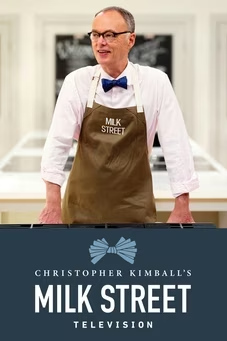
Christopher Kimball’s Milk Street Television
Transform home cooking with the editors of Christopher Kimball’s Milk Street Magazine.








Support for PBS provided by:
America's Test Kitchen is presented by your local public television station.
Distributed nationally by American Public Television